

القواعد الخمس التي تُبقي الجامعين على قيد الحياة
- تحديد بنسبة 100 %، أو لا شيء. «شبه متأكد» هي الطريق إلى قسم الطوارئ. إذا لم تستطع تسمية النبتة بثقة تامة — الجنس والنوع واستبعاد كل شبيه — فلا تأكلها.
- تعلّم القاتلة أولًا. قبل أن تتعلم ما تقطفه، تعلّم ما لا تقطفه أبدًا. الشوكران السام (poison hemlock)، وشوكران الماء (water hemlock)، وست الحسن (deadly nightshade)، وفطر الملاك المدمّر (destroying angel) تستحق أن تحفظها عن ظهر قلب.
- نبتة جديدة واحدة في كل مرة. تذوّق كمية صغيرة من نوع جديد واحد فقط، ثم انتظر 24 ساعة. بهذه الطريقة، إذا لم يوافقك شيء، تعرف تمامًا ما سببه.
- اعرف أرضك. تجنّب أطراف الطرق (عوادم السيارات وملح الطرق)، والمروج المرشوشة بالمبيدات، ومصارف المصانع. البري لا يعني النظيف.
- خذ ما ستستعمله فقط، واترك الكثير. الجمع علاقة مع مكان، والإفراط فيه ينهي هذه العلاقة.
كيف تقرأ مستوى الأمان
كل نبتة برية صالحة للأكل في تطبيق Moon Phase Garden تحمل مستوى أمان ملوّنًا. إنها طريقة سريعة لتقدير مقدار الحذر الذي تتطلبه النبتة قبل أن تدخل في التفاصيل أصلًا.
| المستوى | ما معناه |
|---|---|
| 🟢 أخضر | يصعب الخلط بينها وبين أي نبتة خطرة، وتحضيرها متسامح. بدايات جيدة: الهندباء البرية، وحشيشة الدجاج، والرجلة. |
| 🟡 أصفر | صالحة للأكل، لكن بتحفّظ حقيقي: شبيه سام، أو خطوة تحضير إلزامية، أو جزء يجب تجنّبه. تمهّل وتحقّق من كل نقطة. |
| 🔴 أحمر | للجامعين ذوي الخبرة الحقيقية فقط. هامش الخطأ ضيّق: إمّا أن الشبيه خطير، وإمّا أن النبتة تحتاج معالجة دقيقة لتصبح آمنة. |
لوحة الشبيهات السامة لا تُخفى أبدًا
هذا أهم قرار تصميمي في التطبيق كله، ولذلك نقوله بوضوح: كل مدخل جمع يعرض شبيهاته الخطرة بجوار النبتة مباشرة — ظاهرة دائمًا، لا في تبويب عليك أن تبحث عنه. الترجمة الخاطئة أو التحذير المخفي هنا ليسا خطأً مطبعيًا، بل حالة تسمّم. بعض الأزواج التي يجدر معرفتها قبل أن تخطو خارج بيتك:
| تريد… | لا تخلط بينه وبين… |
|---|---|
| Wild carrot (Queen Anne's lace) | Poison hemlock & water hemlock — among the deadliest plants in North America. |
| Wild garlic / ramps | Lily of the valley and false hellebore — no onion smell, and toxic. |
| Elderberries | Pokeweed: never eat the berries. Elder: cook ripe berries only; never eat stems, leaves or unripe berries. |
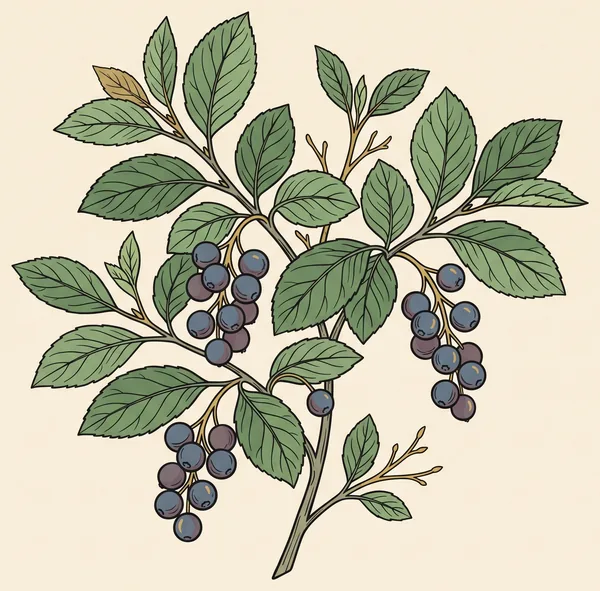 Blue/black wild berries Blue/black wild berries | Deadly nightshade and pokeberries. |
بعض النباتات المتسامحة للبداية
إذا كنت مبتدئًا، ابدأ بنباتات يصعب حقًا الخطأ فيها — ومع ذلك، تأكّد من كل واحدة منها. تحمل كل واحدة منها درجة الأمان من التطبيق — وتعني 🟡 أن هناك أمرًا واحدًا يجب أن تتحقق منه أولًا.
| النبتة | لماذا هي بداية جيدة |
|---|---|
| 🟢 الهندباء البرية (dandelion) | لا تُخطئها العين، وكلها صالحة للأكل، وتنمو في كل مكان. الأوراق والأزهار والجذور كلها تُستعمل. |
| 🟡 التوت الأسود / توت العليق (blackberry / raspberry) | ثمار مركّبة (عناقيد من حبيبات صغيرة) على سيقان شائكة. صُنّفت صفراء لأن ليس كل عنقود توت نبات عليق: تأكّد في كل مرة من الساق الشائكة ومن الثمرة المكوّنة من حبيبات، واحذر الأشواك. |
| 🟢 حشيشة الدجاج (chickweed) | ورقة سلطة لطيفة الطعم، وفيرة وسهلة التعلّم. Look-alike: scarlet pimpernel (toxic) — square stems, orange or blue flowers, no line of hairs. Chickweed has round stems with a single line of fine hairs. |
| 🟡 نبات القطف (lamb’s quarters) | كنز غذائي. اطبخه كالسبانخ وتناوله باعتدال (الأوكسالات). Look-alike: young nightshade seedlings (toxic). Lamb's quarters has a white, mealy coating on its new leaves; nightshade does not. |
| 🟡 نبات الديس (cattail) | «سوبرماركت المستنقع» — لا تجمعه إلا من مياه نظيفة، لأنه يمتص كل ما تحمله المياه. Young shoots look like iris (toxic) — confirm last year's brown seed heads on the same stand before you pick. |
اعرفها قبل أن تجمع: الآمن مقابل الشبيه القاتل
1 · Ramps vs. Death Camasقاتل
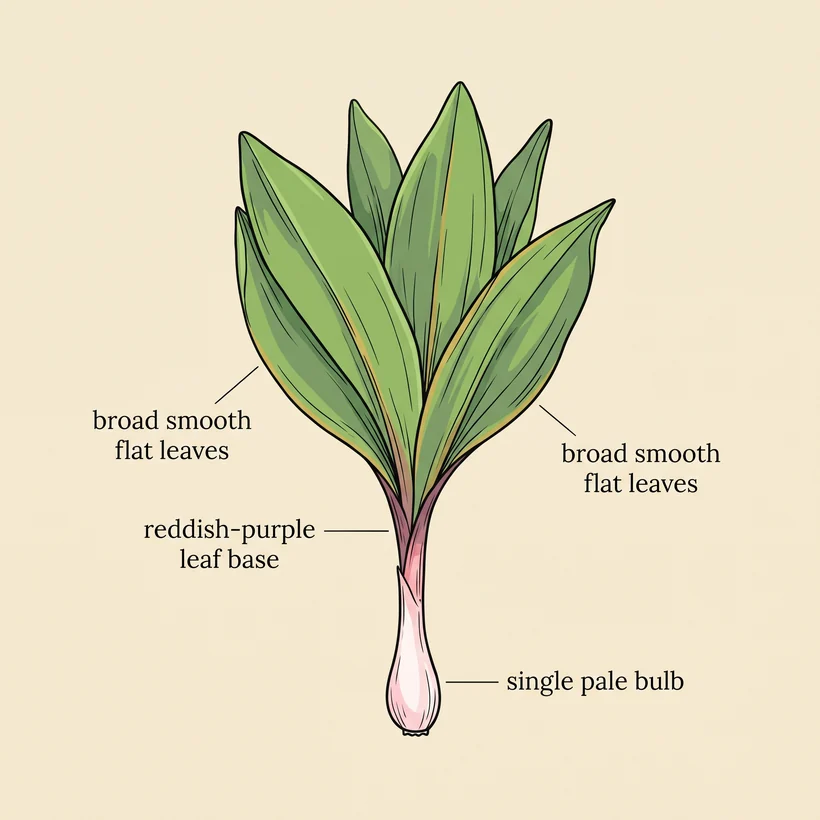
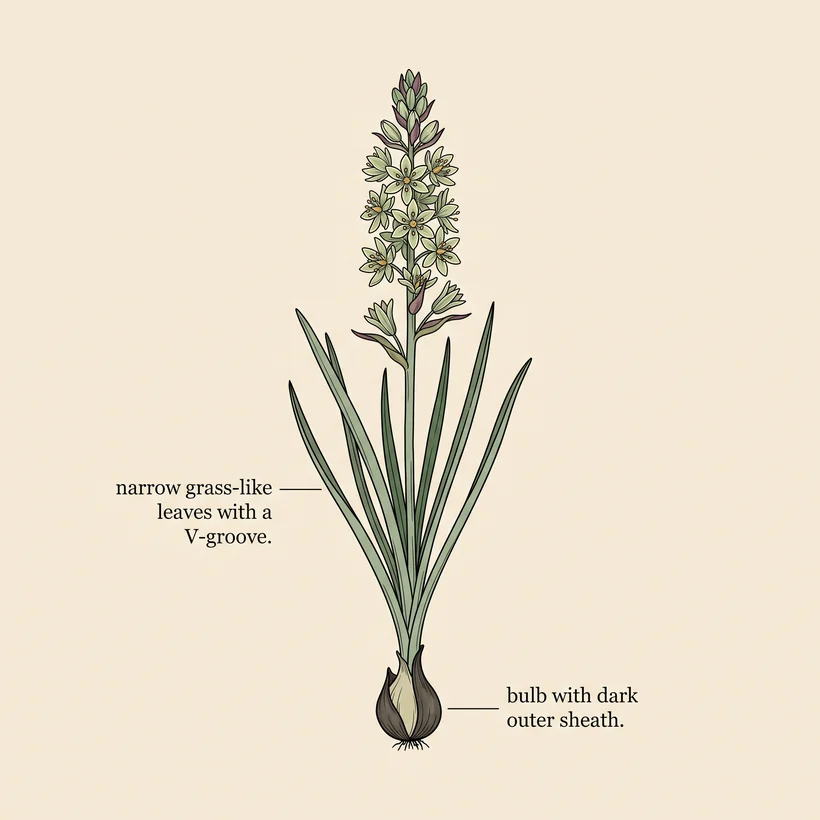
The tell: Crush a leaf — if there is no onion smell, do not eat it. Smell each leaf separately and wash your hands between — scent on your fingers can fool you. Also rule out false hellebore: pleated, ribbed leaves, no smell, and deadly.
2 · Watercress vs. Water Hemlock & Fool's Watercressقاتل
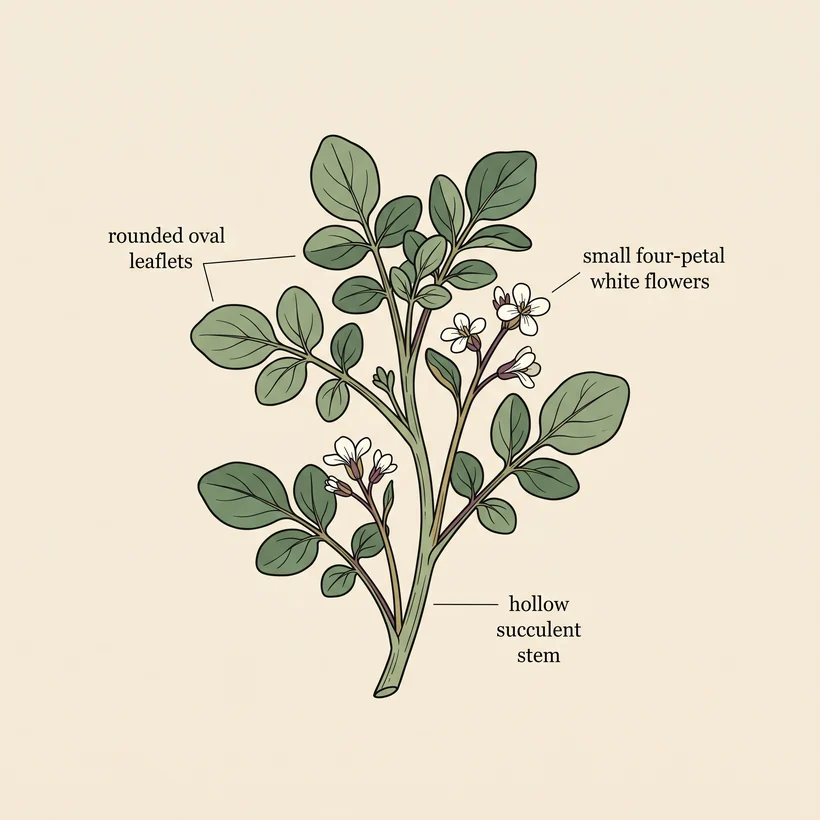
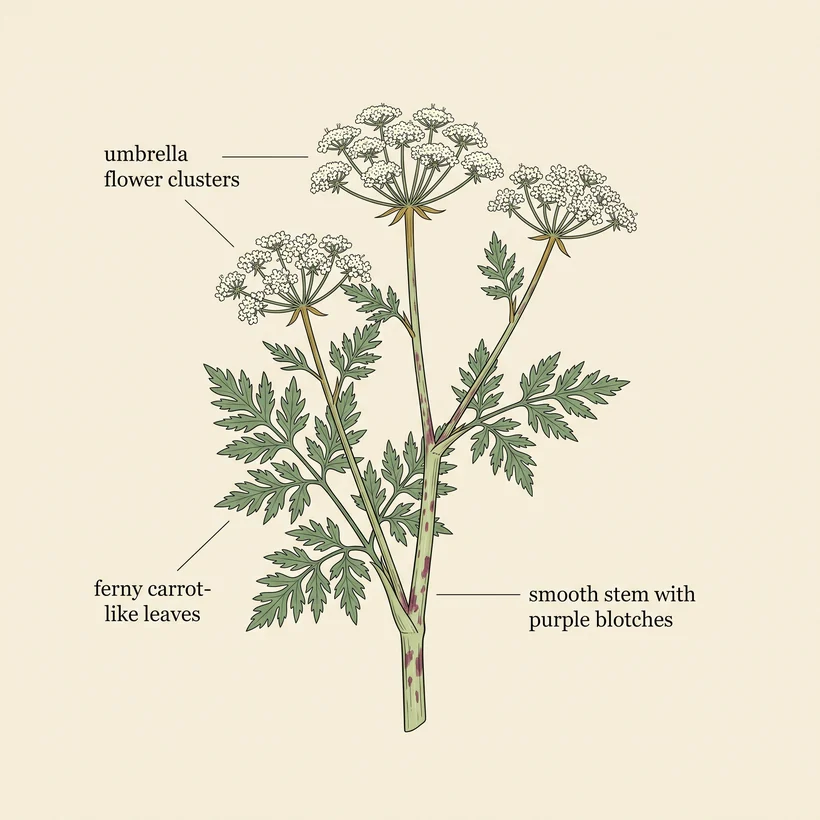
The tell: Watercress has smooth-edged leaflets and four-petaled flowers. Toothed leaflets or umbrella-shaped flower clusters mean a carrot-family look-alike — water hemlock or fool's watercress. Back away.
3 · Yarrow vs. Poison Hemlockقاتل
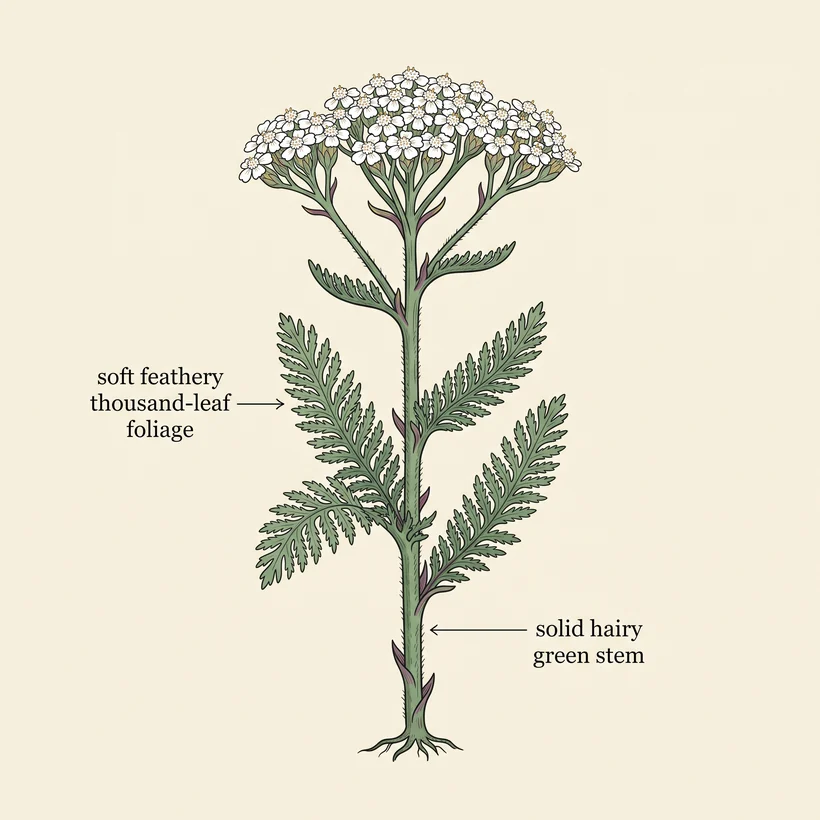
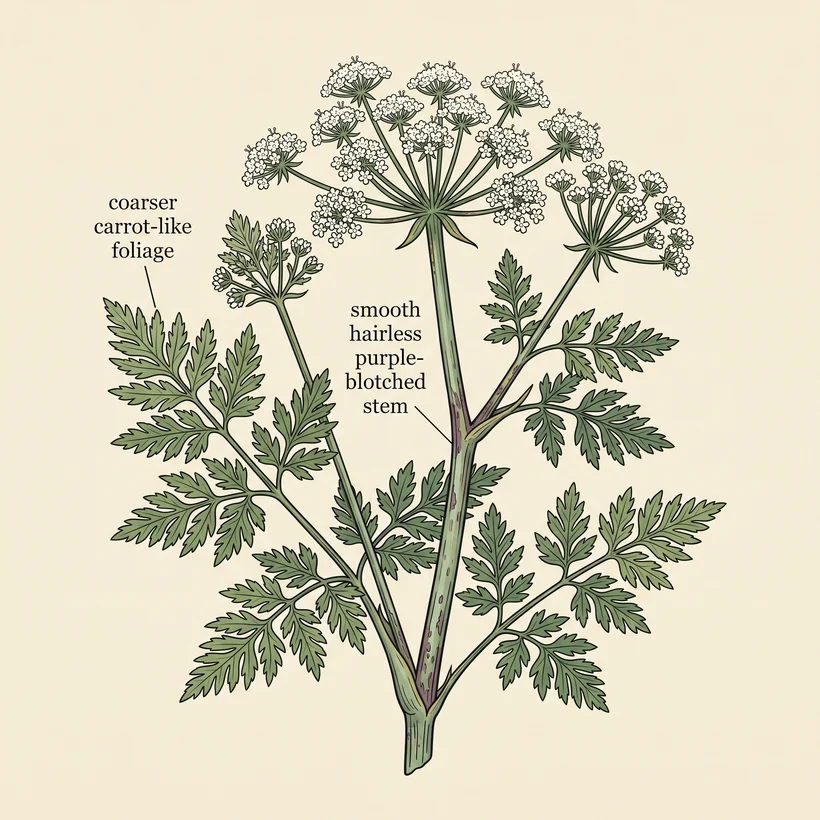
The tell: Hairy solid stem = yarrow. Smooth, purple-spotted stem = walk away.
4 · Comfrey vs. Foxglove (first-year rosette)سام
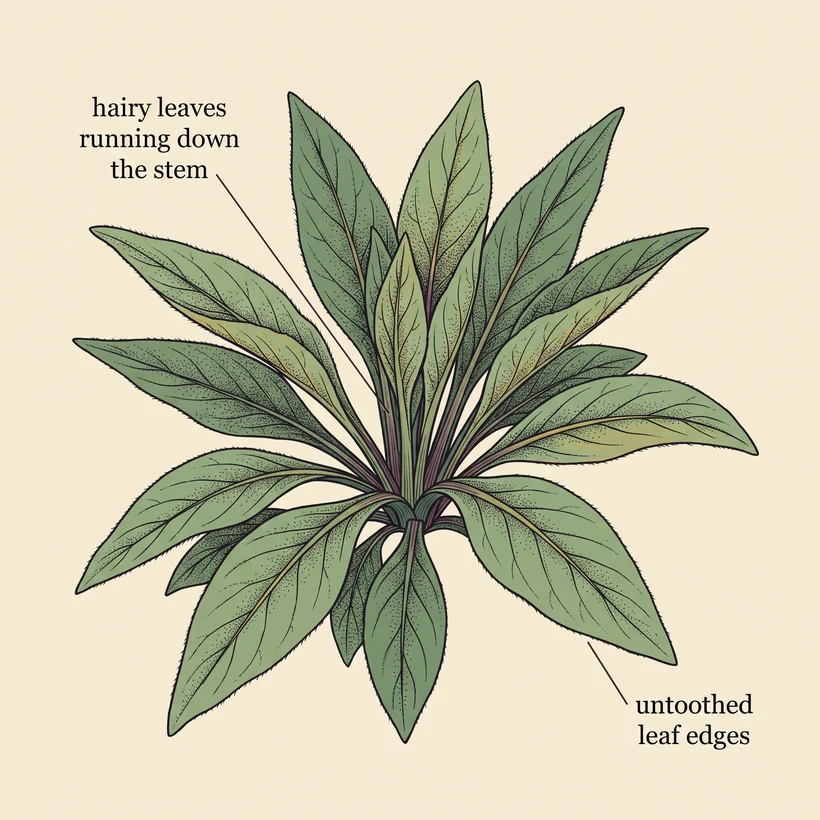
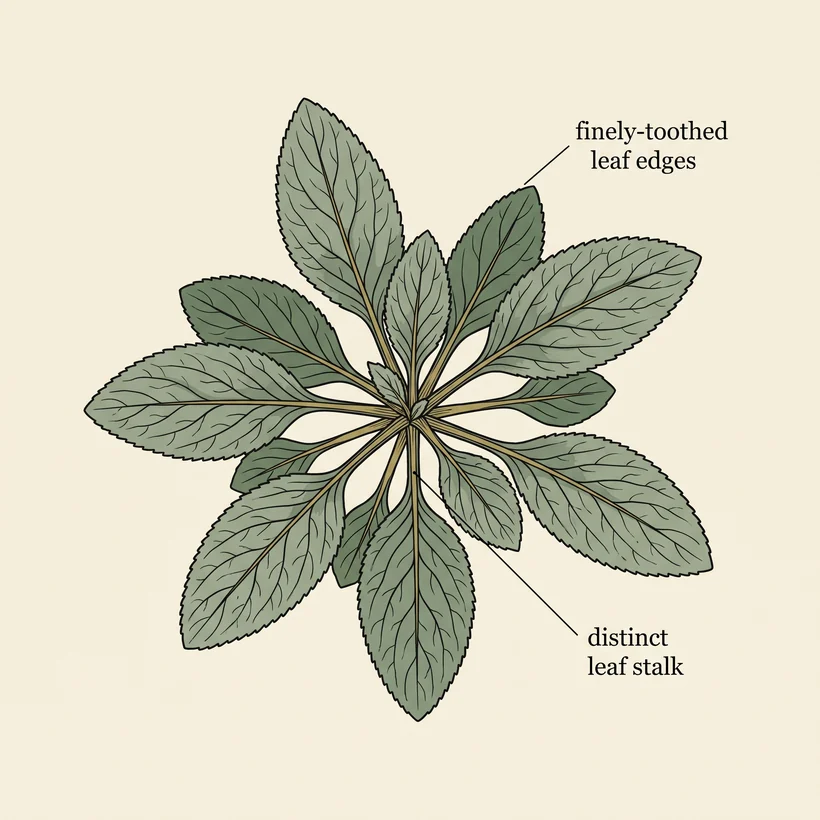
The tell: A toothed edge and a clear leaf-stalk mean foxglove — a heart toxin. Avoid. Only use comfrey you planted yourself and have seen flower.
5 · Milkweed vs. Dogbaneسام
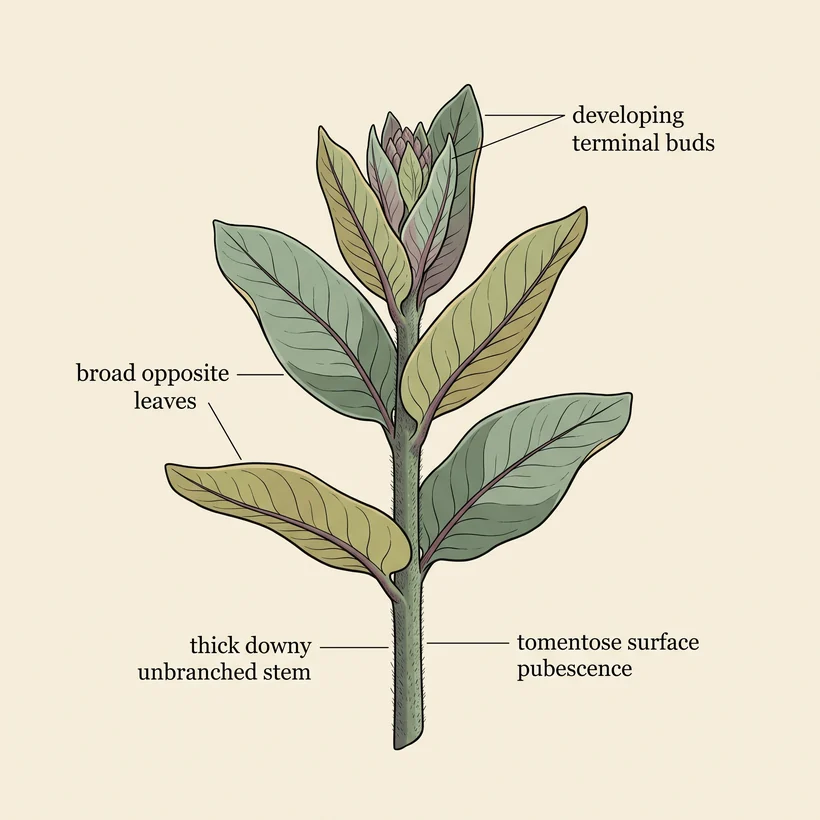
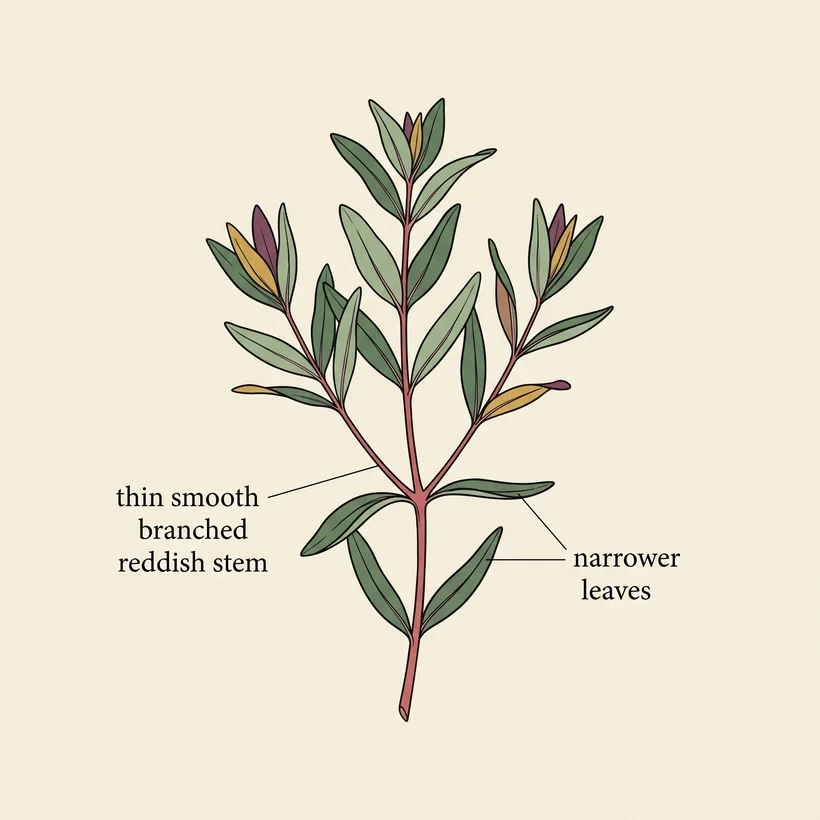
The tell: Young shoots: milkweed is thick and covered in fine hairs; dogbane is thin, smooth, often reddish and hairless. No hairs = don't eat it. Milky sap proves nothing — both have it.
6 · Boneset vs. White Snakerootسام
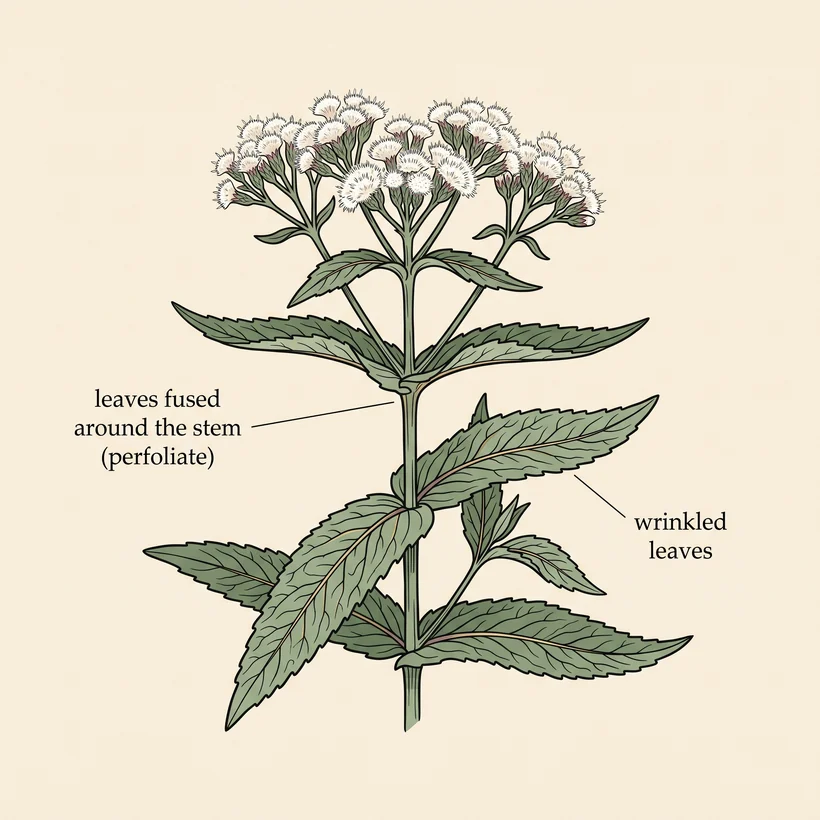
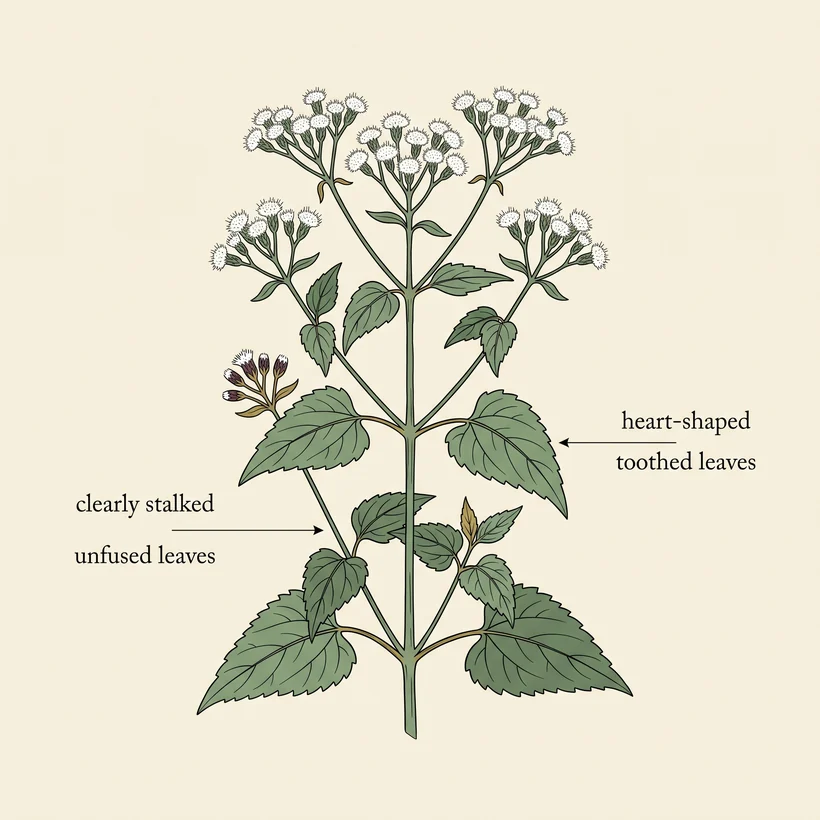
The tell: Stem-through-the-leaf is boneset. Separate stalked leaves are snakeroot — the milk-sickness toxin.
7 · Purslane vs. Prostrate Spurgeسام
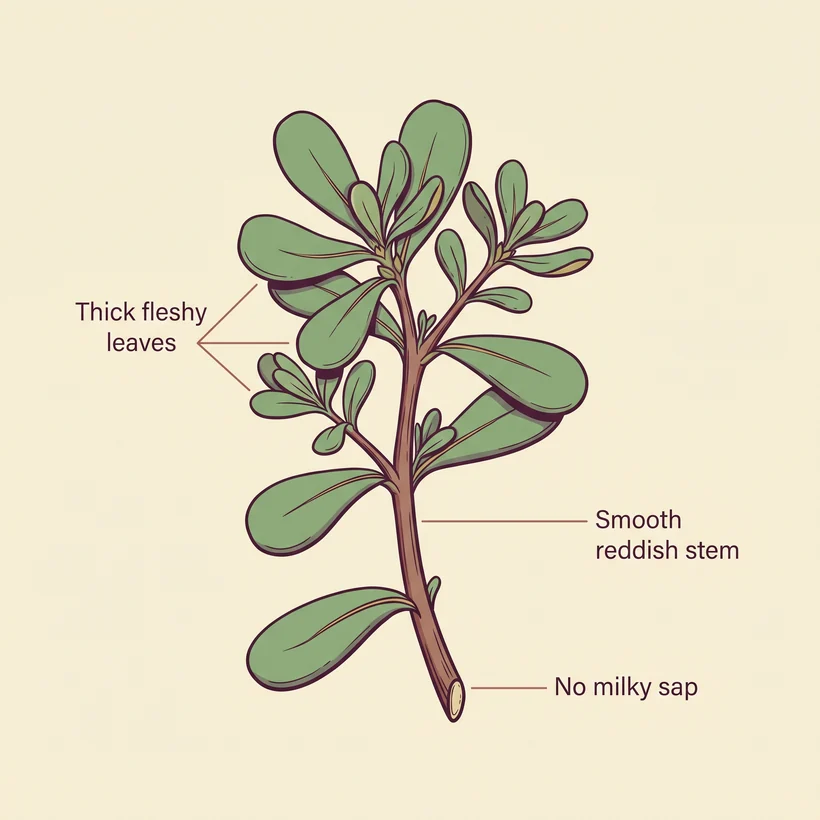
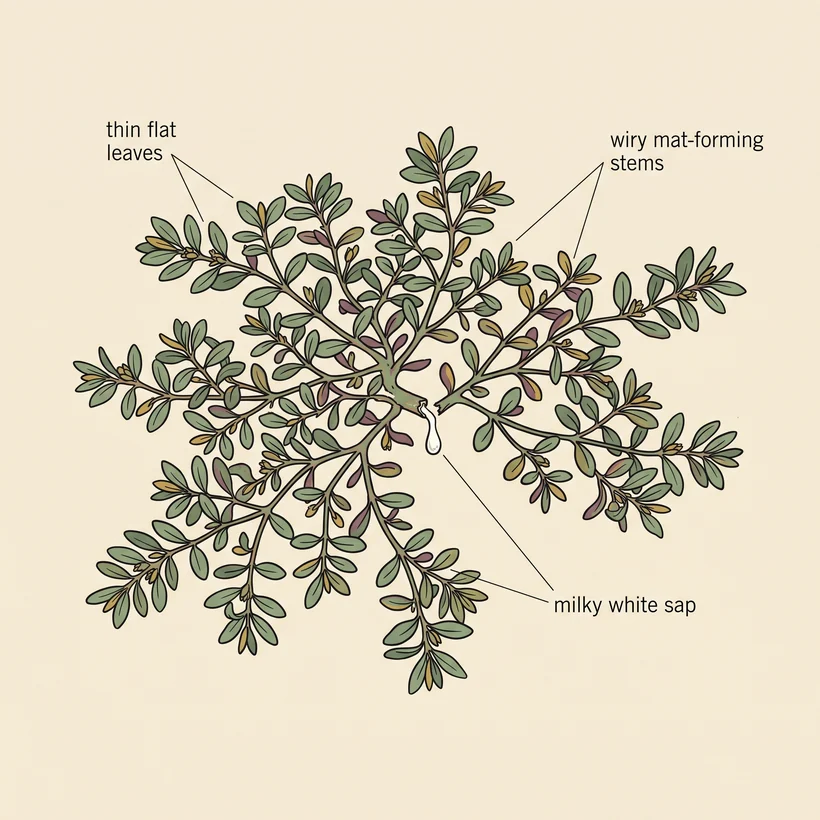
The tell: Snap a stem — milky sap means spurge. Fleshy leaves and no sap means purslane.
8 · Wild Garlic vs. Autumn Crocusقاتل
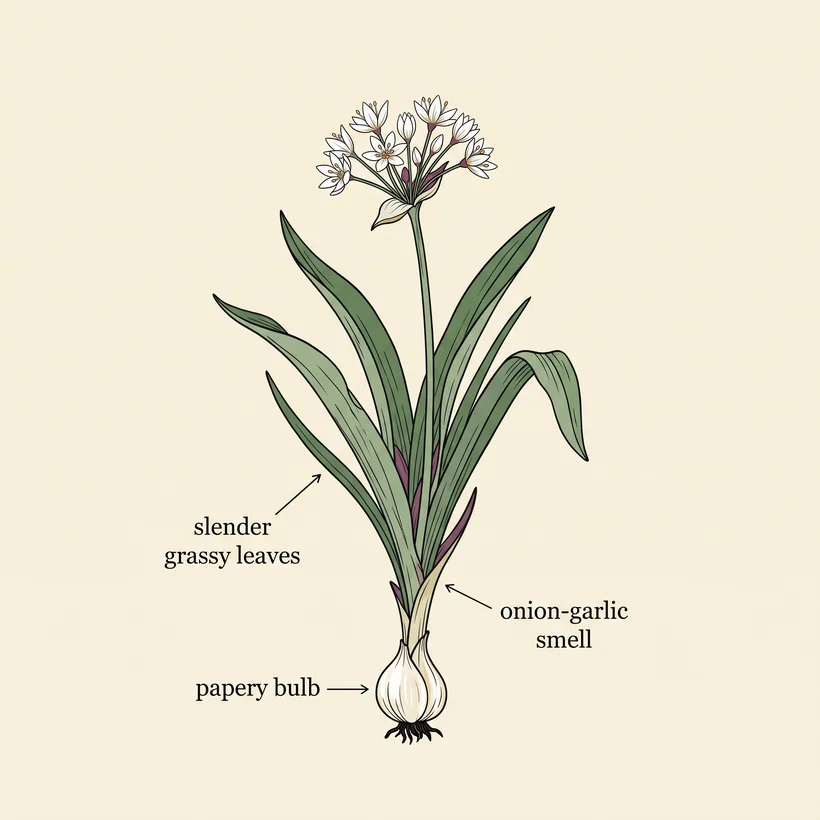
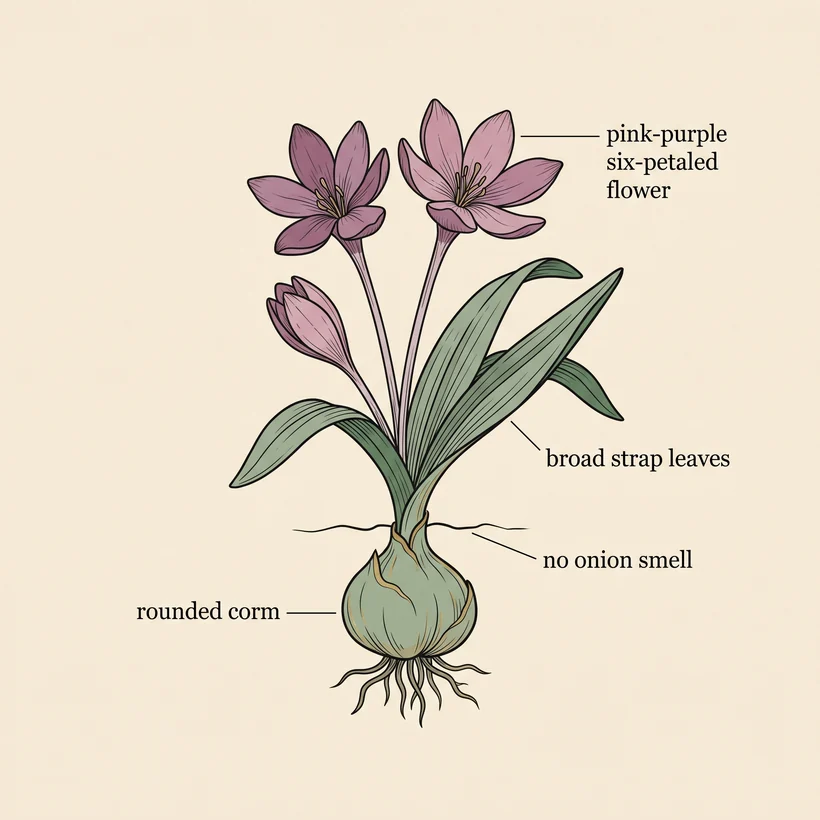
The tell: No onion smell means do not eat it — autumn crocus colchicine has no antidote.
9 · Field vs. Marsh Horsetailسام
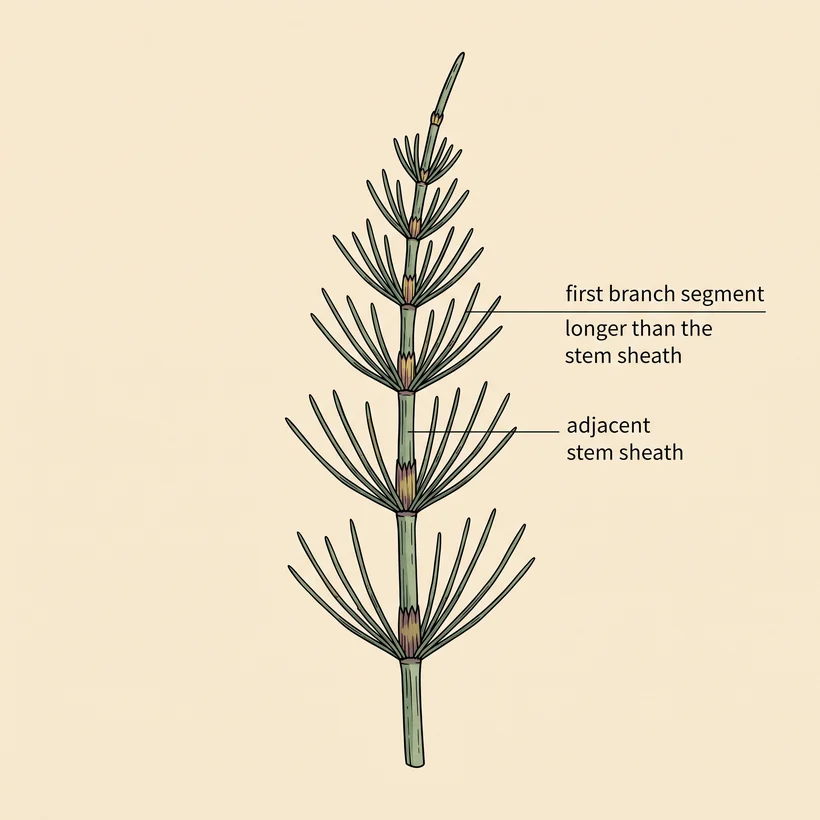
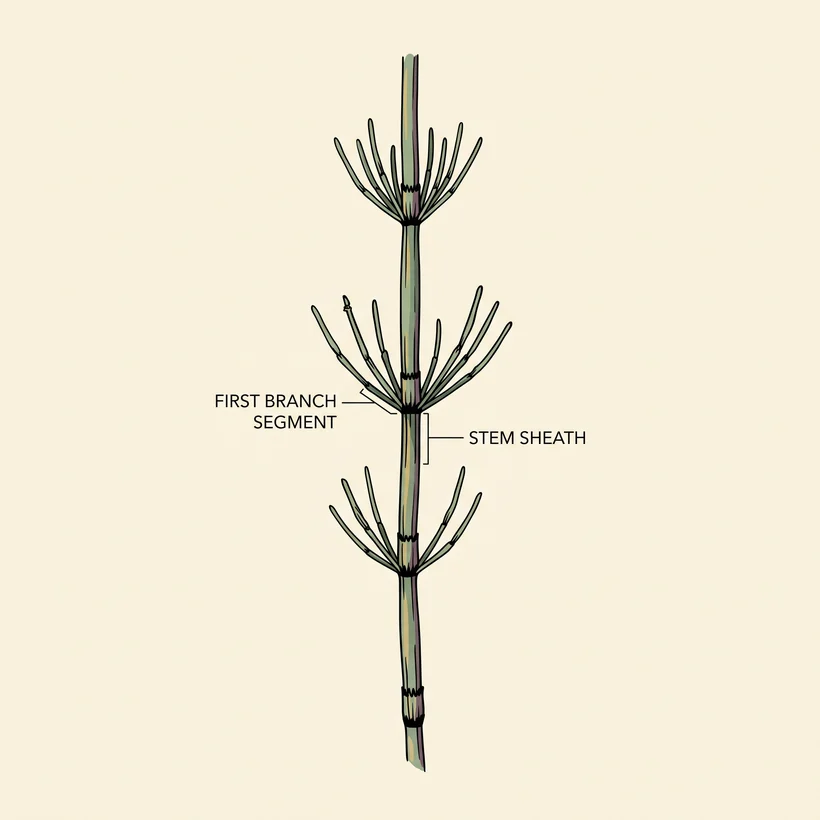
The tell: Compare that first branch segment to the sheath — shorter points to the toxic marsh species.